Buy Early-Bearing Pear Tree Varieties – Top 3
Early-bearing varieties of pear trees stand out for delivering harvests within two to three years of planting, making them ideal for gardeners seeking quick results or those new to fruit cultivation. This article focuses on three such varieties—Conference, Williams’ Bon Chrétien, and Invincible—exploring their characteristics, cultivation requirements, and benefits for home orchards. These selections ensure productive yields while enhancing garden functionality, appealing to both novice and experienced growers across the United Kingdom.
The fruit trees experts at CRJ Fruit-Trees nursery advise that early-bearing varieties of pears trees that you can buy thrive in well-drained, sunny sites to support robust root systems and early fruiting. They recommend choosing certified, disease-resistant stock tailored to British conditions for optimal performance. This guidance highlights the importance of informed variety selection to establish a sustainable and productive orchard.
Conference: The Reliable All-Rounder
Conference pears, a staple in British horticulture, are celebrated for their consistent early bearing and adaptability. Originating in 1894 at Hertfordshire’s Sawbridgeworth nursery from a cross between Williams’ Bon Chrétien and Glou Morceau, this variety dominates UK pear production, accounting for over 60 per cent of commercial orchards. When grafted onto semi-dwarf rootstocks like Quince A or C, Conference begins fruiting as early as the second year, reaching manageable heights of 3 to 4 metres. This size suits smaller gardens or trained forms like espaliers, enhancing both yield and aesthetic appeal.
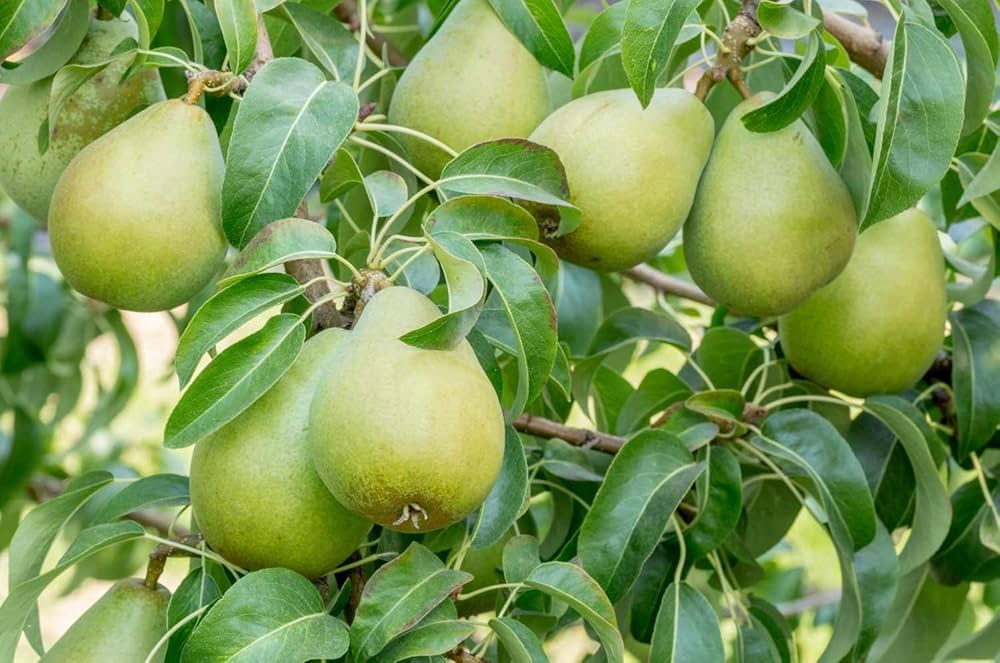
The fruit is medium to large, with smooth green skin that yellows slightly upon ripening in mid to late September. Its fine-textured, juicy flesh offers a subtle sweetness with a hint of spice, making it versatile for fresh eating, cooking, or preserving. Mature trees can yield up to 50 kilograms annually under optimal conditions, providing substantial returns for minimal maintenance. For gardeners looking to buy fruit trees, Conference on Quince rootstocks ensures vigorous, virus-free stock ready for immediate planting.
Cultivation requires attention to soil and site conditions. Plant in fertile, loamy soil with a pH of 6.0 to 7.0, amended with compost to improve drainage and nutrient retention. A sunny, sheltered location promotes flowering, while regular watering during the first two seasons prevents stress, particularly in drier regions like East Anglia. Conference is partially self-fertile, producing fruit alone, but yields increase with a pollinator like Williams’ nearby. Pruning in late winter to maintain an open canopy encourages light penetration and air circulation, reducing disease risk.
Pests such as pear psylla, which causes sooty mould, and diseases like fire blight are manageable with proactive care. Apply horticultural oils during dormancy to control psylla, and prune fire blight-affected shoots promptly, disinfecting tools between cuts. Resistant rootstocks and organic practices, such as encouraging ladybirds to control aphids, align with sustainable gardening trends popular in the UK.
Williams’ Bon Chrétien: The Early Dessert Pear
Williams’ Bon Chrétien, often simply called Williams’, brings a classic early-bearing option with origins near Bristol in the 18th century. Despite its French name, this pear was documented in 1770 and quickly became prized for its precocity, fruiting within 18 to 24 months on dwarfing rootstocks. Growing to 2.5 to 3.5 metres, it fits well in compact spaces like patios or mixed borders, making it a favourite for urban gardeners seeking to buy fruit trees with immediate impact.
The pears are large, with pale yellow skin blushed red on the sunward side, ripening in late August to early September. Their juicy, melting flesh delivers a rich, aromatic sweetness, ideal for fresh desserts or juicing. Yields reach up to 40 kilograms per mature tree, with fruits storing well for two weeks in cool conditions. This early harvest extends the fruit season, complementing later varieties like Conference.
Williams’ requires full sun and well-drained soil, ideally in raised beds for clay-heavy areas like the Midlands to prevent waterlogging. Mulching with bark conserves moisture and deters weeds during establishment. A balanced NPK fertiliser applied in spring supports bud formation, but over-fertilisation risks frost-sensitive growth. Unlike Conference, Williams’ is not self-fertile, requiring a pollinator like Conference for consistent fruit set. Summer pruning controls vigour, thinning crowded clusters to prioritise quality over quantity.
Scab, a fungal disease causing corky lesions, is the primary concern, preventable with copper-based sprays in early spring. Bacterial canker may affect trunks in wet conditions, so ensure proper drainage, especially in western regions with higher rainfall. With diligent care, Williams’ produces exhibition-quality pears, perfect for local shows or markets, enhancing its appeal for dedicated growers.
Invincible: The Resilient Modern Choice
Bred in 1984 at Kent’s East Malling Research Station, Invincible is a modern early bearer designed for fire blight resistance, making it a robust choice for variable climates. On Quince C rootstock, it fruits within two years, reaching 3 metres with a spreading canopy ideal for cordon or fan training. Its precocity stems from breeding for vigour, enabling rapid canopy development and early flowering.
The medium-sized fruits, harvested in mid-September, feature thick green skin ripening to yellow, with crisp, mildly sweet flesh suited for poaching or baking. Yields average 45 kilograms per tree, with good storage into October. Invincible’s self-fertility simplifies orchard planning, though cross-pollination with B-group varieties like Conference enhances output. Its resilience and early bearing make it a smart choice for gardeners seeking low-maintenance options when they buy fruit trees.
Plant in a wide pH range (5.5 to 7.5), accommodating diverse soils from Scottish loams to southern chalks. Incorporate mycorrhizal fungi at planting to boost root establishment, and use drip irrigation in water-scarce areas to maintain consistent moisture without wetting foliage. Winter pruning shapes the tree, cutting back leaders by one-third and laterals to three buds to encourage fruiting spurs.
Invincible’s fire blight resistance reduces reliance on chemical controls, appealing to eco-conscious growers. Codling moth, a minor pest, is managed with pheromone traps. Canker resistance further suits it to humid regions, ensuring reliability in wetter western counties. This variety’s adaptability positions it as a forward-thinking option for climate-resilient gardening.
Practical Considerations for Success
Choosing among Conference, Williams’, and Invincible depends on garden priorities: Conference for high yields, Williams’ for premium dessert quality, and Invincible for disease resistance. All three integrate into sustainable designs, such as permaculture setups with nitrogen-fixing companions like clover. Soil preparation is critical—test pH annually and amend with lime or sulphur to maintain optimal levels. Slow-release potassium-rich fertilisers enhance fruit quality without excessive vegetative growth.
Water management varies regionally. In eastern England, summer irrigation supports establishment, while western areas require drainage to prevent root issues. Drip systems offer efficiency, aligning with water conservation goals. Pruning follows a dual schedule: winter for structure, summer for crop refinement. Sharp, sterilised tools prevent disease transmission, particularly for fire blight and canker.
Integrated pest management enhances sustainability. Companion plants like alliums deter aphids, while biological controls, such as nematodes for weevils, target specific threats. Harvesting at the right moment—when fruit necks yield to gentle pressure—preserves quality. Store in cool, ventilated spaces, checking regularly for spoilage to maximise usability.
These pears shine in culinary applications: Conference in salads, Williams’ in tarts, and Invincible in preserves like chutney. Intercropping with soft fruits diversifies output, while vertical training maximises small spaces. Southern warmth suits Williams’, while Invincible thrives in cooler northern climates.
Sourcing from reputable nurseries ensures healthy stock, with bare-root trees offering cost-effective planting in autumn. Stake young trees to prevent wind rock and mulch to retain soil warmth. Long-term, renew soil every five years and monitor nutrient levels through leaf analysis to sustain productivity.
These varieties offer economic and environmental benefits, reducing reliance on supermarket produce and supporting pollinators through blossom provision. In educational settings, they serve as practical tools for teaching propagation techniques like chip budding. Research from NIAB reinforces their role in UK horticulture, with future trends favouring resilient hybrids like Invincible. By incorporating these early bearers, gardeners can create productive, sustainable orchards tailored to British conditions.